
What We Offer
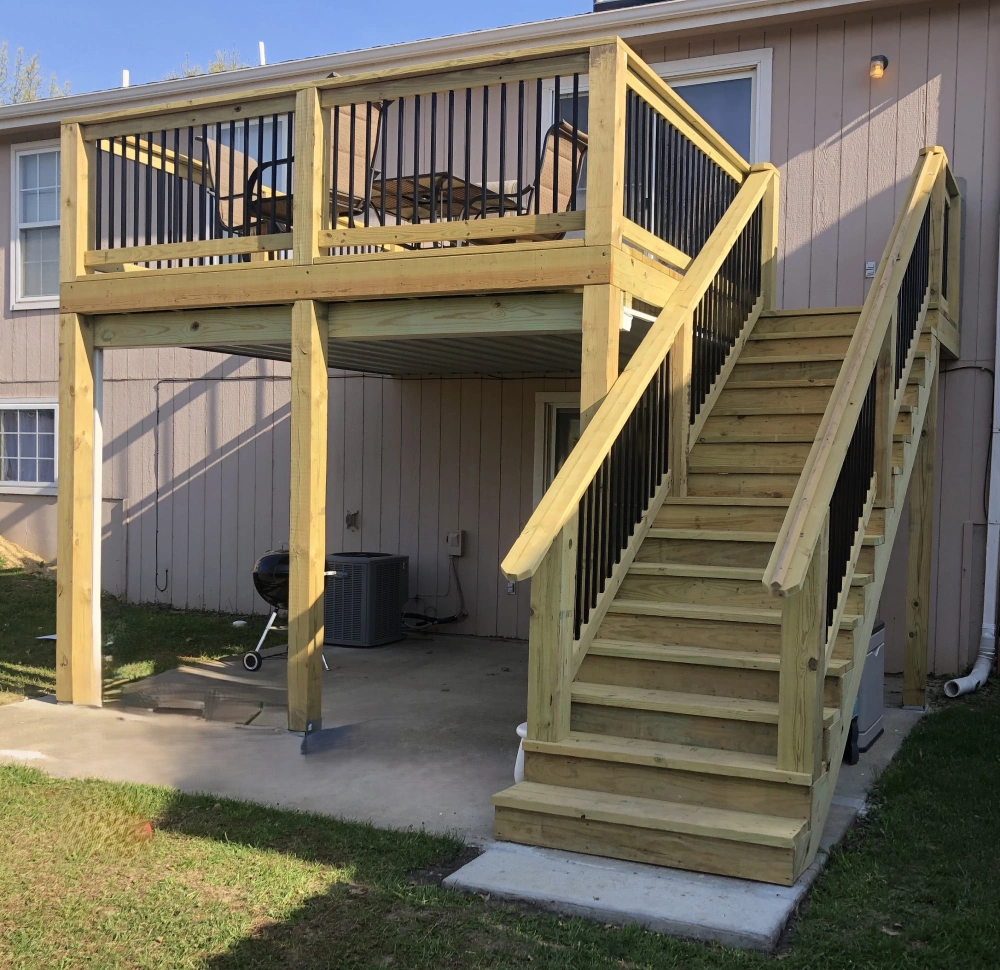
Deck Size and Optional Features
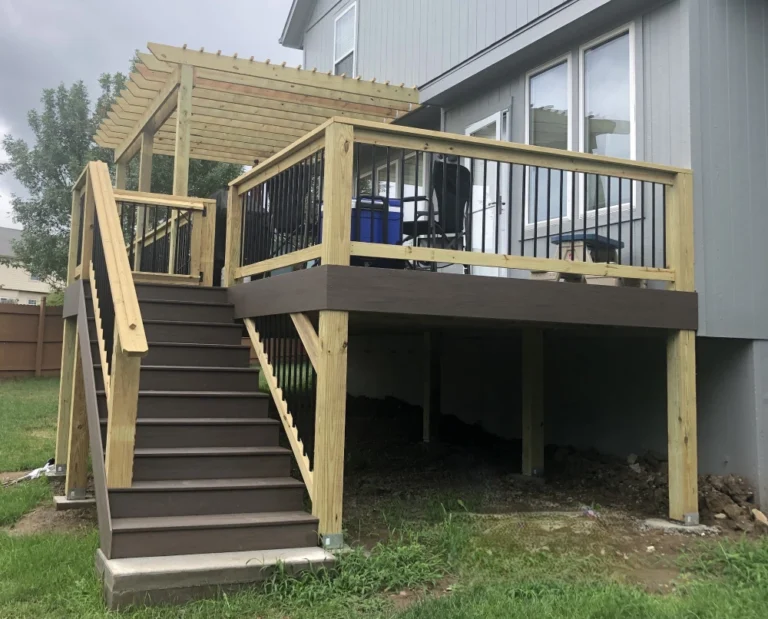
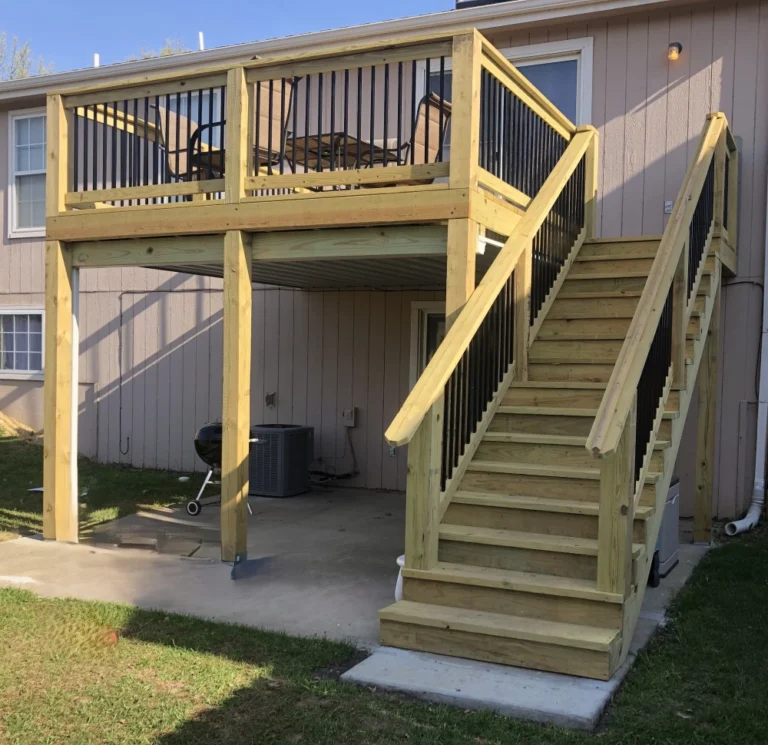
The size, layout, and height of your deck set the foundation for the entire project. To provide an accurate estimate, a few basic details are important:
- The overall size or dimensions of the deck
- The approximate height of the deck off the ground
- The number of stair sets and landings
- The width of the stairs and landings
- Whether any gates are needed and where they will be located
- If the deck will include skirting or lattice
- Any accessibility or ADA-related considerations
Decking Material Options
The decking material you choose affects how your deck looks, how much maintenance it requires, and how well it holds up in Johnson County, Kansas weather. Each option has advantages depending on budget, appearance, and long-term expectations.
Wood Decking Options
- Pressure-treated lumber, known for affordability and durability
- Cedar, valued for its natural look and resistance to decay
- Redwood, chosen for its rich appearance and stability
Exotic Hardwood Decking
- Ipe (Brazilian Walnut)
- Cumaru (Brazilian Teak)
- Tigerwood
- Massaranduba (Brazilian Redwood)
These materials are extremely durable and long-lasting but typically come at a higher cost.
Low-Maintenance Decking Options
- Composite decking such as Deckorators, Trex, and TimberTech
- PVC decking such as AZEK and Fiberon
Composite and PVC decking are popular for homeowners who want long-term durability with minimal upkeep.
Deck Board Installation Methods
- Nailed fastening, often used on traditional wood decks
- Face-screwed fastening, where fasteners are visible on the surface
- Hidden fastener systems, which create a clean, fastener-free look
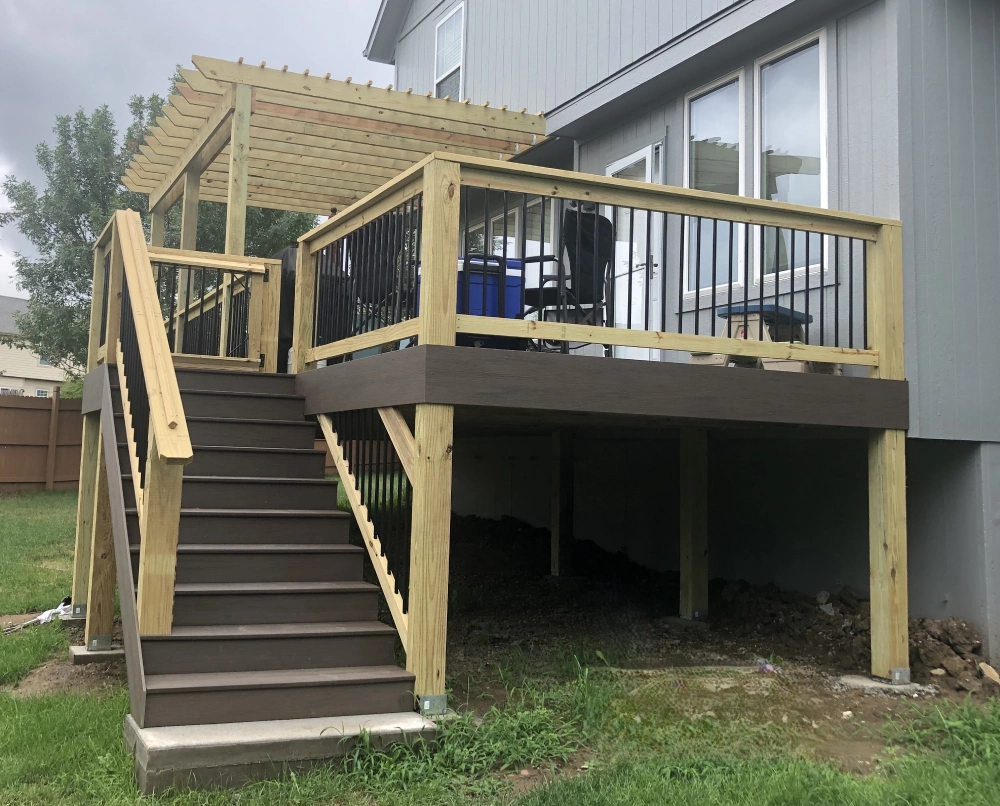
Railing and Handrail Options
Handrail Styles
- Between-post handrails, commonly used on stairs
- Over-the-post handrails, which provide a flat, continuous top rail
Railing Materials and Systems
- Wood railings for a traditional look
- Composite or PVC-wrapped railings for low maintenance
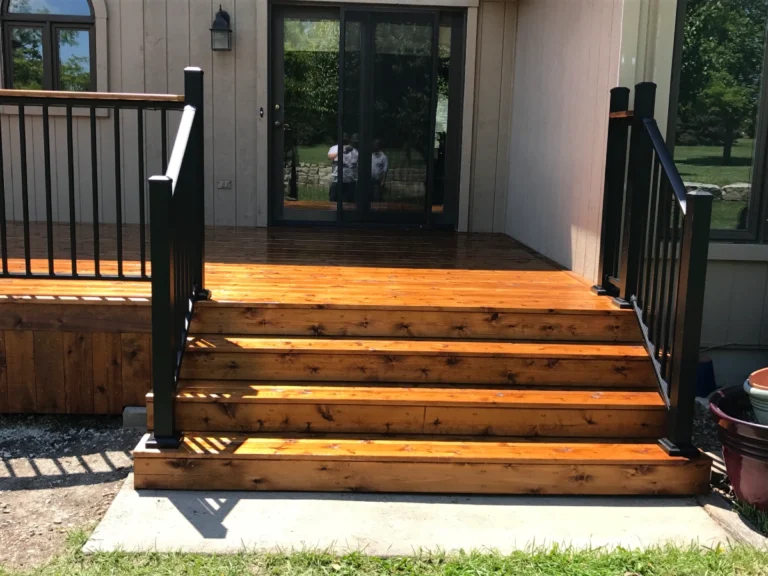
- Painted aluminum railings for strength and clean lines
- Painted steel railings for added durability
We frequently install aluminum railing systems from DekPro Prestige, Westbury, and Deckorators, selected for quality, consistency, and long-term performance.
Posts and Balusters
- Post sizes typically include 4x4 or 6x6, depending on deck height
- Posts may be unfinished, painted, stained, or capped
- Baluster options include wood, composite, PVC, glass, cable, aluminum, and steel
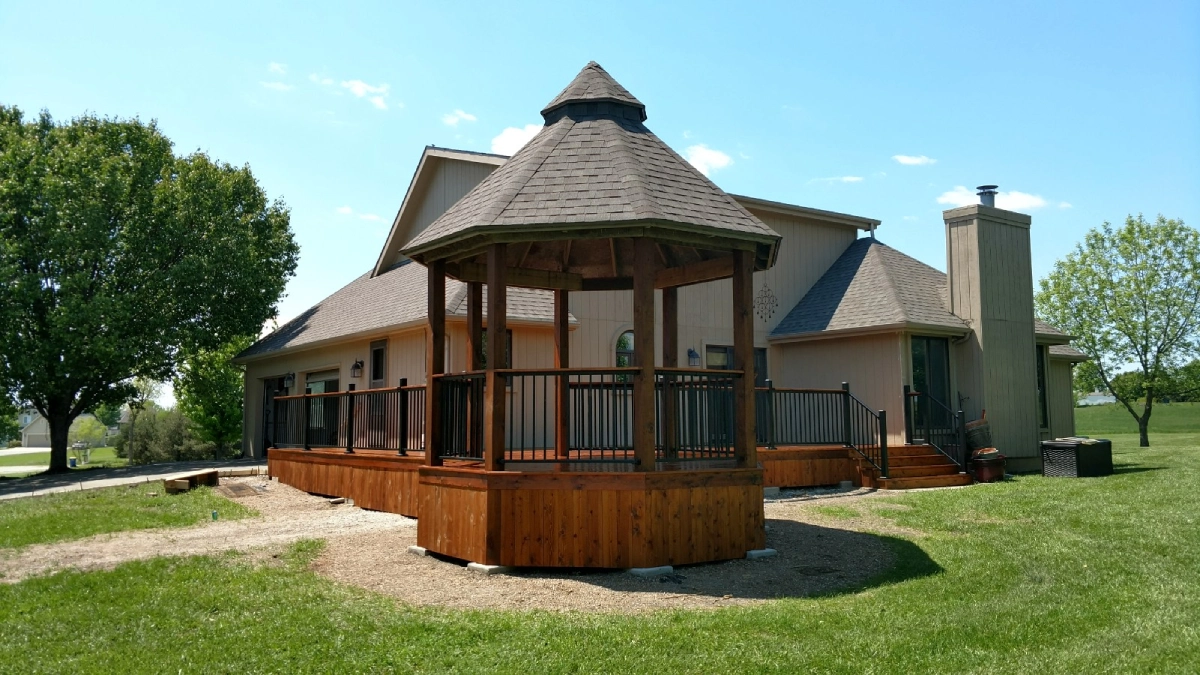
Wood Deck Finishes and Protection
Whenever possible, we use #1 grade pressure-treated lumber, such as YellaWood® brand treated lumber, which offers straighter boards and more consistent performance over time.
Finish options include:
- Stain, to enhance the natural grain
- Paint, for a uniform, sealed surface
- Clear UV protectant, to reduce fading while keeping a natural look
- Left unfinishedallowing the wood to weather naturally
If your deck is built using AC2 pressure-treated lumber, it typically needs time to dry before applying a weather barrier or finish. Depending on the time of year and weather conditions, this drying period is usually one to three months. Allowing the wood to dry properly helps finishes adhere and perform as intended.
Covered Decks, Screen Rooms, and Seasonal Spaces
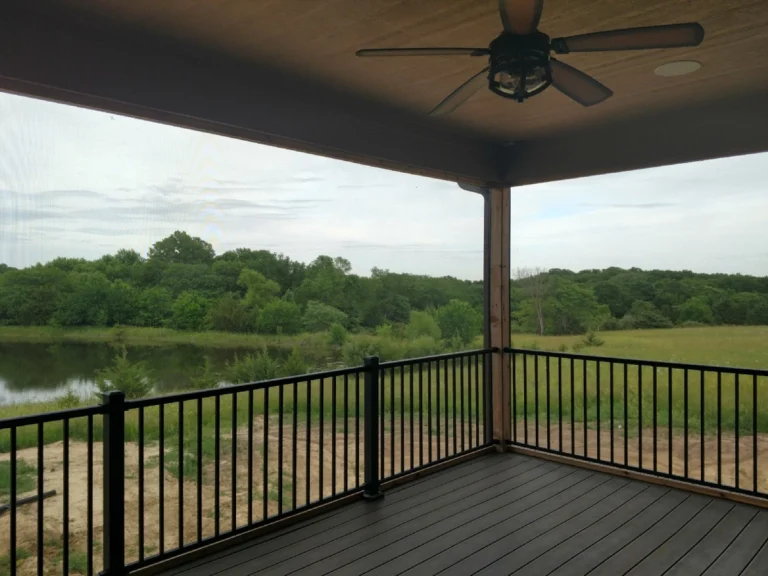
Covered Decks
Covered decks typically include a roof integrated into the deck or attached to the home. Options often include:
- Roofing materials that match the house
- Finished ceilings in wood, vinyl, or drywall
- Gutters to manage water runoff
Screen Rooms
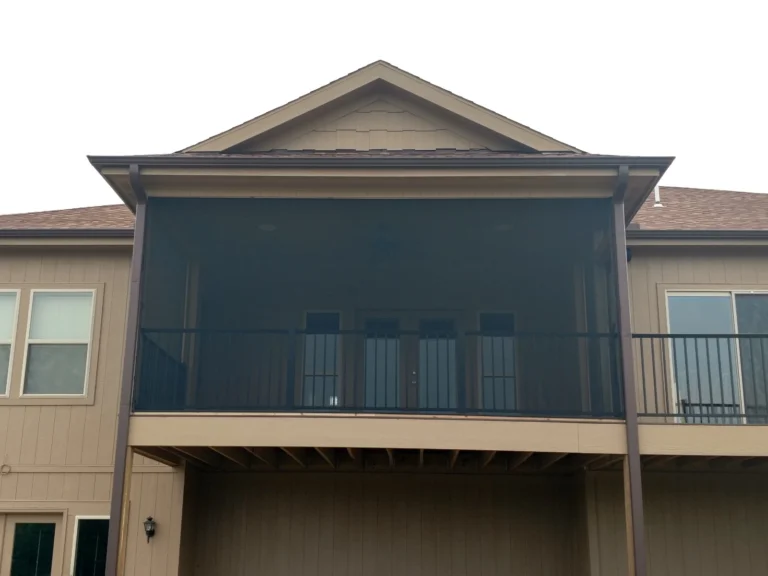
Screen rooms allow you to enjoy fresh air without insects. We commonly use SCREENEZE® screening systems paired with durable screen materials such as TuffScreen®. Planning considerations include:
- Full or partial screening
- Door type (standard entry or patio slider)
- Door size, swing direction, locks, and color
Three-Season and Four-Season Rooms
- Three-season rooms are typically used spring through fall
- Four-season rooms are designed for year-round use with insulated walls and windows
The right option depends on comfort goals, usage, and overall project scope.
Electrical and Lighting Options
Common options include:
Ready to Take the Next Step?
Frequently Asked Questions
If AC2 pressure-treated lumber is used, the deck usually needs one to three months to dry before applying a weather barrier or finish. The exact timing depends on the season and weather conditions.
Railing options include wood, composite or PVC-wrapped systems, aluminum, and steel. We commonly install aluminum railing systems from DekPro Prestige, Westbury, and Deckorators for durability and clean design.
Yes. Many homeowners choose covered decks, screen rooms, or seasonal rooms. We work with SCREENEZE® screening systems and TuffScreen® materials for screen rooms, and can help determine whether a three-season or four-season room makes sense for your goals.
Other Important Considerations
Wood Movement in All Wood Decks
All wood decks — especially those built with pressure-treated lumber — will shrink, twist, and move over time as the wood dries and acclimates to the environment. This is a normal characteristic of wood and does not indicate poor workmanship or material quality. Understanding this upfront helps set realistic expectations for how a wood deck will look and perform over time.
Existing Sprinkler Systems and Buried Utilities
If a new deck is being built with a different footprint than an existing deck, underground items can come into play. Sprinkler lines, drainage, gas lines, electrical lines, or other buried utilities may need to be located, adjusted, or protected. These conditions can affect labor, layout, and overall project scope.
Identifying these factors early helps avoid delays, unexpected costs, and changes once construction begins.